
|
A celebration of the 20th anniversary of Shrek . 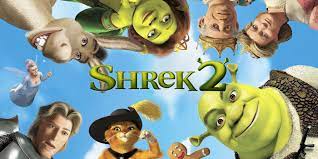 Image c/o Dreamworks Animation Val Hill Visiting Entertainment Columnist You could ask pretty much any millennial and older Gen Z’er about a movie series that was a core part of their childhood, you would have good odds that they would say the Shrek film series. Three years after the ever iconic first Shrek movie hit theaters, came the two time Academy Award nominated film: Shrek 2. Released in May of 2004, Shrek 2 received the nominations of Best Animated Film and Best Original Song.
The voices of Saturday Night Live legends Mike Myers (Shrek) and Eddie Murphy (Donkey), as well as Cameron Diaz (Fiona). John Lithgow rounded out the main cast, voicing the ever loved short king Lord Farquaad. It is safe to say that most everyone has heard the famous line from the movie “…Some of you may die, but that’s a sacrifice I am willing to make” by none other than our favorite 4 '2 ruler, Lord Farquaad. The overall success of this film is undeniable and was way ahead of its time in terms of animation and production. The studios of Universal Pictures and DreamWorks Animation had a re-release of the film during the month of April to celebrate the 20th anniversary. “The Shrek franchise has become a cultural touchstone and has brought joy to audiences around the world for more than two decades,” said Jim Orr, President of Domestic Theatrical Distribution for Universal Pictures. “Its impact on popular culture has been profound, transcending generations, and it continues to resonate with viewers long after its initial release. So, as we celebrate the 20th anniversary of Shrek 2, we’re excited to bring this iconic film back to the big screen.” This movie, along with the original, were a huge hit with audiences of all ages and proves that not every sequel is garbage. The success of both films allowed for two more movies to be made in following years, and there are even whispers of a fifth movie being made.
0 Comments
Wicked, Company, Cabaret, and lead slate of shows coming to theatres across the Bay. 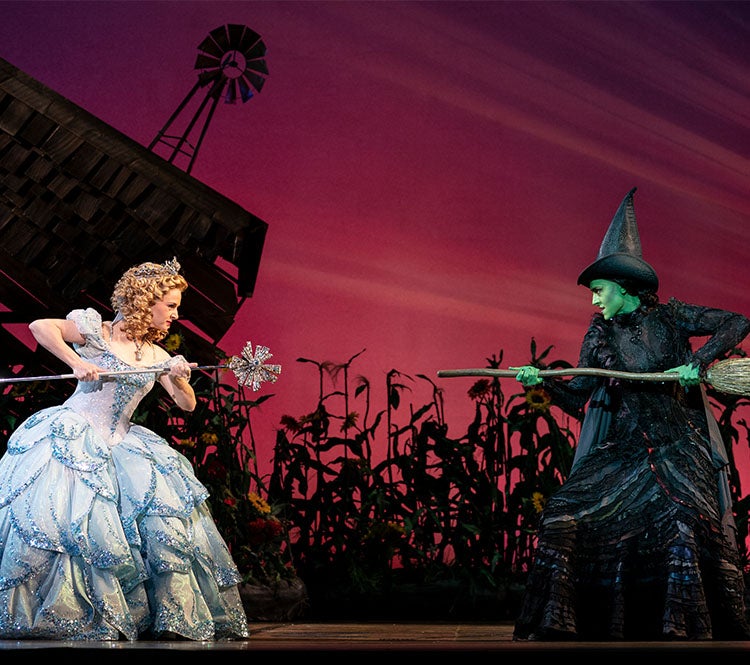 Image c/o Wharton Center for Performing Arts By Drew Paxman Visiting Entertainment Columnist Wicked headlines a stacked slate of musicals coming to San Francisco, while the San Jose Performing Arts Center looks to host Peter Pan and Frozen.
After celebrating its 20th anniversary on Broadway on October 30, 2023, Wicked returns to the city where it originally premiered in 2003. The Wizard of Oz prequel tells the story of Elphaba, a misunderstood woman with “emerald-green skin,” who eventually becomes the Wicked Witch of the West, all while befriending a popular blonde named Glinda. “If you want to see a story about two women and their ever-evolving friendship, and a story about if a person is really wicked or [has] wickedness thrust upon them, and if you want to see a story about an underdog learning their power and learning their voice, come see this show,” prompted Olivia Valli, who has taken on the role of Elphaba for this production. While Wicked sets to end San Francisco’s summer season (performances begin August 28 and end October 13), four other shows are set to occupy the Orpheum, Curran, and Golden Gate Theatres. The Tony-Award winning revival of Stephen Sondheim’s Company kicks off the summer, followed by the biopic The Cher Show, the musical adaptation of Mrs. Doubtfire, and the Bob Dylan jukebox musical Girl From the North Country. In San Jose, a new adaptation of Peter Pan, based on the original 1954 musical, takes center stage from June 25 to 30, while Disney’s Frozen casts a spell of eternal winter from August 21 to September 1. Near the Lamorinda area, Walnut Creek’s Lesher Center for the Arts says “Willkommen” to a new production of Cabaret from May 26 to June 23. Set in late 1920s Berlin, Cabaret explores the tangled relationships of a writer and nightclub singer during the rise of the Nazi Party. For Rotimi Agbabiaka, who plays the iconic Master of Ceremonies (or Emcee), joining the company of this production was a full-circle experience. “Almost two decades ago, playing the [Emcee] in college cemented my decision to attempt a career in theatre,” Agbabiaka posted on Instagram. “I can’t wait to return to this role as a professional and I hope you’ll come to the Cabaret, old chum.” These shows are just an overture of productions set to take center stage in the Bay Area this summer. Hopefully, their success will lead to an encore of more to come in the future. Tickets for these productions can be found on the BroadwaySF, Broadway San Jose, and Lesher Center for the Arts websites. 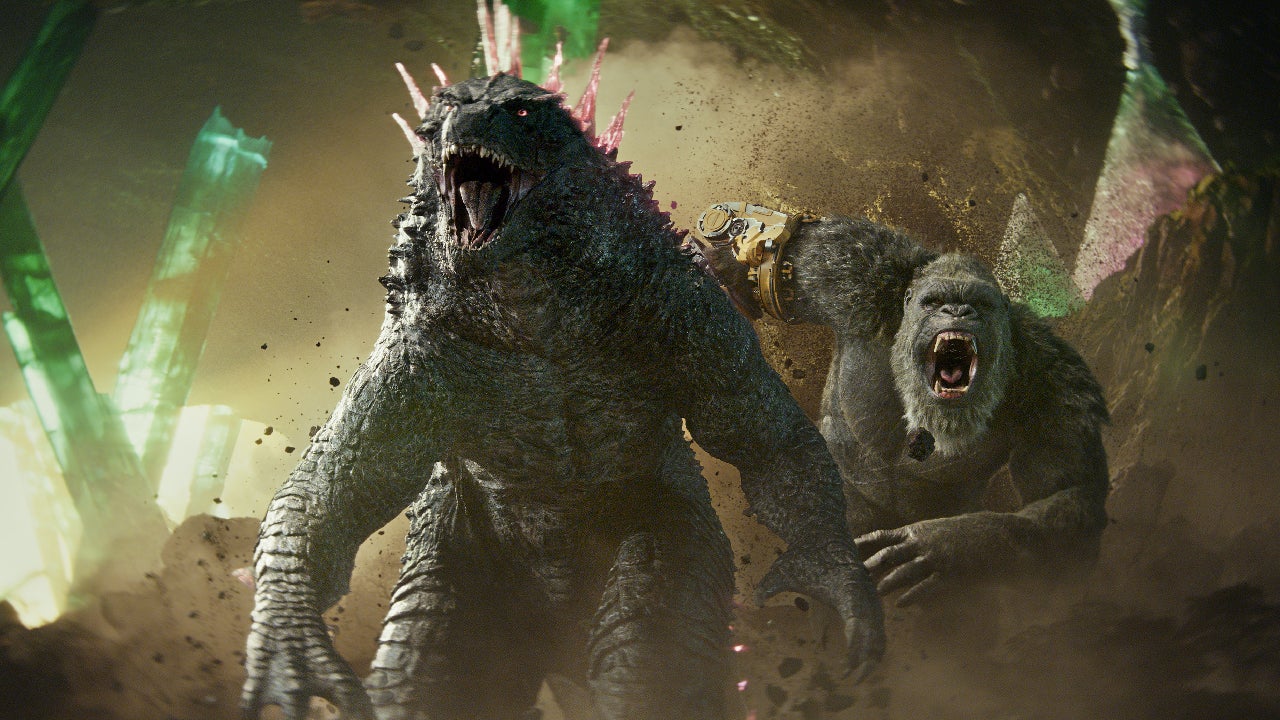 Image c/o Legendary Pictures By Matthew Colvin Entertainment Columnist When Ishiro Honda’s original 1954 Godzilla film was first released, the eponymous giant monster was intended to be a creature that was all too relevant to the times; an allegory for the nuclear bomb. Godzilla was portrayed as a giant, unstoppable entity, with the desire and capability to do nothing but kill and destroy, powered by nuclear energy and setting its sights on leveling Japan. At the time it was a nation that, only nine years after being subjected to two atomic bombings, was still recovering from traumas both physical and mental. However, as I sat to watch Adam Wingard’s Godzilla x Kong: The New Empire on Saturday afternoon and witnessed that same monster being ridden by a giant ape into battle in an underground Hollow Earth against another giant ape riding a similar, ice-breathing giant lizard, all in the name of protecting humanity, I was struck by a single thought. This is not that Godzilla anymore. And that’s not entirely a bad thing.
Godzilla x Kong is silly and it knows it. Its premise builds on the previous Godzilla and King Kong films by Legendary Entertainment, though you hardly need any investment in the franchise to understand the film. All that matters is that at the start of the film, Godzilla and Kong are both tentatively on good terms with humanity, but on terrible terms with each other, and they ultimately will have to set aside their differences buddy-cop style to team up against a threat too great for either of them to defeat alone. The film follows three concurrent plotlines; one for each of the titular kaiju, and one for the humans trying to convince them to fight together. The human plotline, while trying to carry most of the thematic weight of the film, is by and large deadly boring, and feels like a creative afterthought when compared to the level of fun the filmmakers are having with the monsters. In all fairness, the cast, led by Rebecca Hall as Dr. Ilene Andrews, aren’t doing a bad job here, they’re just given no material to work with and as immature as it sounds, I found it difficult not to spend all of their screen time just waiting for the monsters to show up again. Despite Godzilla getting top billing in the film’s title, King Kong is the character who the film gives far more attention, galvanizing the whole plot and getting an entire found family character arc that took me by surprise. It’s not particularly poignant or profound, but given that he doesn’t speak a word for the entire film, I was impressed at the fact that the filmmakers were able to communicate a full, cohesive story for him. The sound design is densely layered and well-designed, and Wingard knew it; I found myself grinning like an idiot at an extended fight sequence in the film’s finale where the music completely dropped away and the solid VFX and booming audio immersed me in the scale of the monster brawl completely. Cinematographer Ben Seresin crafted some goofily fun shots as well, from a tracking shot where the camera moved through a cresting wave as it froze over, to some wild rotations during a zero-gravity sequence within Hollow Earth. They’re cheap tricks, but for a movie like this, cheap tricks are all that are required. So, is the film good? I’m tempted to say no. The story is borderline incomprehensible and if there are themes, they’re buried under a mountain of mindless action and circuitous plotting. But calling it bad seems beyond unfair, because I’ll be damned if this movie didn’t make me smile a whole lot. It’s not Ishiro Honda’s Godzilla. In fact, it’s probably the furthest thing possible from the original anti-war statement that Godzilla was meant to embody, to the point that it likely isn’t meant to represent much at all at this point. It’s also a far cry from Japanese publisher Toho’s recent Godzilla outings, such as the brilliant Godzilla Minus One. But if you’re looking for the specific kind of joy that only a giant ape smashing an airborne building to bits with a power glove can provide, this might be the film for you. A look at the documentary which uncovers the disturbing secrets behind some of your favorite childhood shows. 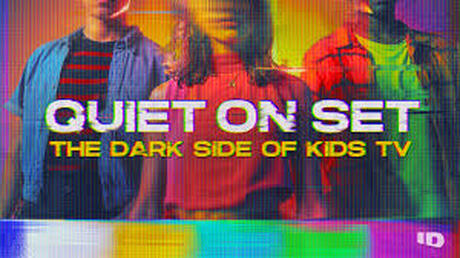 Image c/o Max/HBO By Madison Sciba Editor-in-Chief The Nickelodeon channel was a staple in many childhoods for those who are younger millennials and older Gen Z. Shows like iCarly, Drake and Josh, Zoey 101, and All That dominated the world of children’s television. Shows on Nickelodeon were targeted solely towards kids ranging from age 6 to mid teens, and were comedies that did not hold back from being goofy and outrageous. Unlike the shows that aired on the Disney channel, Nickelodeon’s comedies were not centered around a plot where the main character learns some kind of life lesson. Instead, Nickelodeon shows were purely meant to entertain making audiences laugh. However, the facade of Nickelodeon crumbled as the new Max docuseries, Quiet on Set, revealed the dark hidden secrets and scandals that surrounded the famous children’s television studio.
While a lot of famous names were brought up in the documentary, most noted were Drake Bell and Amanda Bynes. Both were major stars on the channel and have since had very public issues with the law and mental health. The Max docuseries revealed that Bell was sexually abused as a young teen by an acting coach who was working on the set of The Amanda Show. While this may have been the most shocking revelation to come out of Quiet on Set, it was seemingly not the focus of the miniseries. Former Nickelodeon producer Dan Schneider and his questionable actions on sets were the primary focal point of the series. Schneider was responsible for creating some of Nickelodeon’s most popular shows like iCarly, Victorious, Zoey 101, and Drake and Josh. Not only did Quiet on Set reveal that Schneider acted inappropriately to coworkers and subordinates on sets. Former female writers for The Amanda Show recalled how poorly they were treated and how they received a significantly smaller salary compared to the other male writers on the show. Quiet on Set’s main criticism of Schneider is his history of having child actors, specifically female child actors, perform scenes and actions which were considered sexual in nature. Having a teenaged Ariana Grande grunt while squeezing a potato and a whole skit on iCarly actors Miranda Cosgrove and Jeanette McCurdy’s toes. One most notable was a character on The Amanda Show, Penelope Taint, played by the young Amanda Bynes. All references that would not make sense to Nickelodeon’s targeted younger audience but deemed highly inappropriate by a more mature audience. The reason that Quiet on Set has become such a talked about topic on social media is because of how shocking it is that this kind of behavior has been allowed in areas which were supposed to be focused on children. Quiet on Set exposes the dark side of the children’s entertainment industry and the inappropriate actions of a showrunner who was seemingly given complete power over those more vulnerable at Nickelodeon. 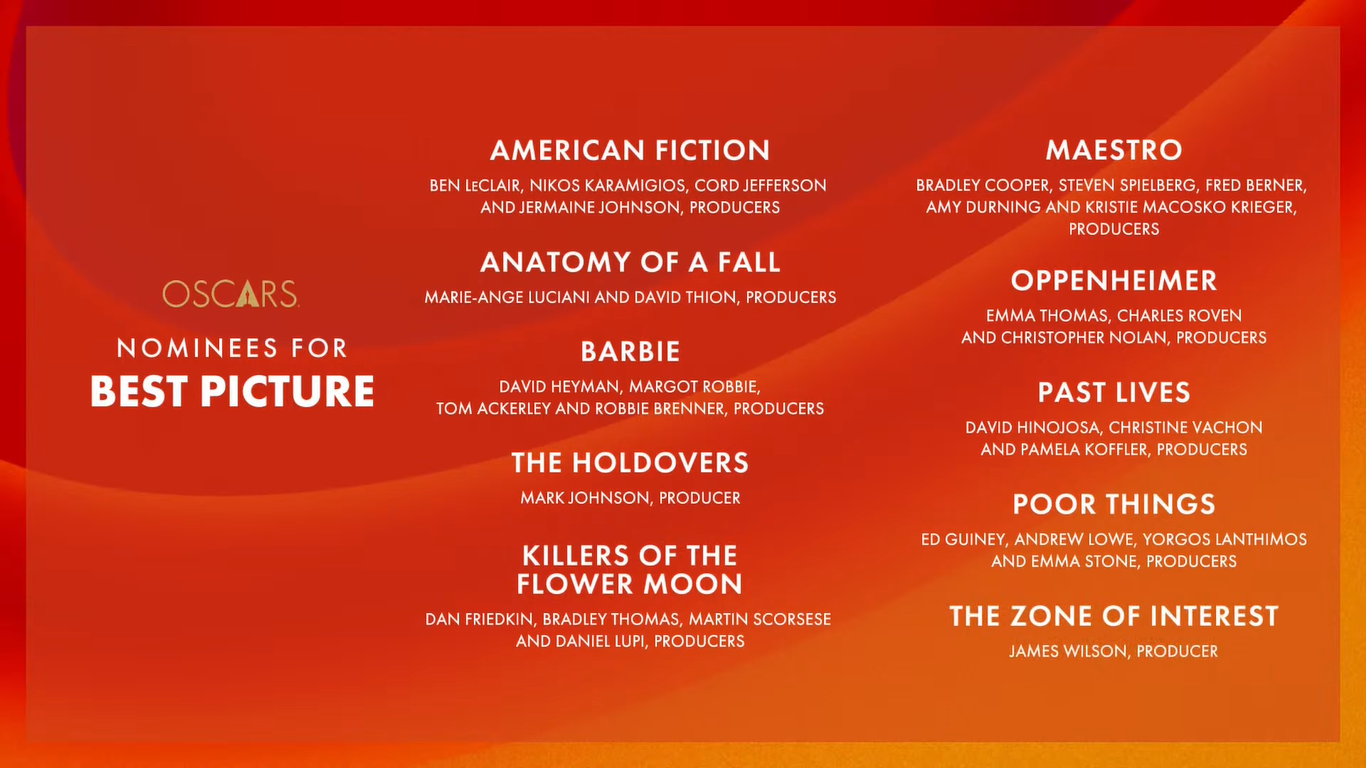 By Andrew Martinez Cabrera Entertainment Editor “Last night was a movie fr” is a saying I seldom say, and watching the 96th Academy Awards earlier this month was no different. The Oscars felt like a three-hour-long, bloated movie where you already saw the ending coming a mile away. Most of my excitement stemmed from getting my guesses right (anytime Oppenheimer won) or wrong (a la Poor Things). It was like a more tamed version of sports betting, where I ethically assume the endorphin rush is on par. So let me take you back to Hollywood’s biggest night, where Oppenheimer sweep was the talk of the town and we got “I’m Just Ken” stuck in our heads again.
BEST SUPPORTING ACTRESS - Da’Vine Joy Randolph, The Holdovers Kicking off the Oscars was one of my favorite moments of the entire broadcast: Da’Vine Joy Randolph receiving her first Academy Award for Mary Lamb, an elite school’s head chef in The Holdovers. Alongside Paul Giamatti and Dominic Sessa, her performance stuck out to me because I had seen her in a principally comedic role before on television and here, she perfectly balanced her comedic sensibilities and her dramatic chops. Tearfully accepting her award, already crying earlier when Lupita Nyong’o was introducing her, mentioning that the glasses Randolph’s character wears were the real glasses her grandmother wore, a person in her life who influenced the role. Starting the Oscars was a heartfelt moment where one of my favorite performances of last year was rightfully recognized. BEST SUPPORTING ACTOR - Robert Downey Jr., Oppenheimer Continuing the winning streak of Oppenheimer, RDJ won his first Academy Award after previously being nominated three times before for Chaplin and Tropic Thunder. Accepting the award with his trademark, almost exaggerated charismatic act expected from him, RDJ started off his speech with this quip, “I'd like to thank my terrible childhood and the Academy, in that order.” Towards the end, he addressed Christopher Nolan and the producer of the film, Emma Thomas, saying, “Here’s my little secret: I needed this job more than it needed me. Chris [Nolan] knew it, Emma [Thomas] made sure she wrapped — surrounded me with one of the greatest cast and crews of all time. Emily [Blunt], Cillian [Murphy], Matt Damon ... it was fantastic and I stand here before you a better man because of it. You know, what we do is meaningful, and the stuff that we decide to make is important." RYAN GOSLING’S “I’M JUST KEN” PERFORMANCE (Barbie) One of the most noteworthy/most talked about thing about this year’s Academy Awards wasn’t Best Picture or Best Director but rather a musical event that has already had more of an impact than this year’s Super Bowl Halftime Show. Ryan Gosling, donning a pink suit, sat mysteriously behind Margot Robbie, already giggling as soon as the first lyrics were muttered. Gosling, singing and making his way across the aisles, pointed the mic towards Margot Robbie, Emma Stone, and Greta Gerwig to sing some of the lyrics. Leading towards the stage (and grabbing the hand of one lucky cameraman) and then on the Dolby stage, a spoof on the “Diamonds are a Girl’s Best Friend” sequence from Gentlemen Prefer Blondes unfolded, cumulating on a final dance number where multiple background dancers and a variety of different Kens took the stage to deliver the performance of a lifetime that blew the roof. If it wasn’t already stuck in your head during the summer, it sure was recemented. For some extra enjoyment, please do yourself a favor and watch this video taken by Francesca Scorsese of her father, 81-year-old Martin Scorsese just dancing gleefully, as Gosling takes the stage. BEST LEADING ACTOR - Cillian Murphy, Oppenheimer Surprising nobody, Cillian Murphy’s momentous performance as J. Robert Oppenheimer took the Oscar home. Having collaborated with Nolan on six different films over twenty years, starting with 2005’s Batman Begins, Murphy had this to say during his speech, “Chris Nolan and Emma Thomas, it’s been the wildest, most exhilarating, most creatively, satisfying journey you’ve taken me on over the last 20 years. I owe you more than I can say, thank you so much.” After shouting how his wonderful cast and crew as well as his family, Murphy concluded his speech, "You know, we made a film about the man who created the atomic bomb and for better or for worse we’re all living in Oppenheimer’s world, so I’d really like to dedicate this to the peacemakers everywhere. Go raibh míle maith agaibh." The Irish phrase at the end roughly means “thank you.” BEST LEADING ACTRESS - Emma Stone, Poor Things Now, this was my biggest shocker of the night. Just two days prior, I watched Poor Things and Past Lives back-to-back in the theater, and while I thought Emma Stone was good, I was sure that Lily Gladstone had it in the bag for Killers of the Flower Moon for her role as Mollie Burkhart. As I say that, I’m sure Emma Stone thought the same thing when Michelle Yeoh called her name when a look of shock came across her face, which in a way is weird because of how much she campaigned for it during awards season. Trying to take control of her anxiety, stumbling over her words and admitting her anxiety, she said to the audience, “Yorgos [Lanthimos, Poor Things’ director] said to me, ‘Please take yourself out of it,’ and he was right, because it’s not about me,” Stone said. “It’s about a team that came together to make something greater than the sum of its parts. And that is the best part about making movies, is all of us together. And I am so deeply honored to share this with every cast member, with every crew member, with every single person who poured their love and their care and their brilliance into the making of this film.” She ended her speech thanking her family, ending with a joke about her broken dress. BEST DIRECTOR - Christopher Nolan, Oppenheimer If Murphy secured the bag, then Nolan winning his first Oscar was also inevitable. Nolan took home the Academy Award after being nominated for the second time for Best Director, previously for 2017’s Dunkirk. Accepting the award from another award-winning director, Steven Spielberg, Nolan started with a somewhat profound and shocked retrospection, “To the Academy — movies are just a little bit over 100 years old. We don’t know where this incredible journey is going from here. But to know that you think I’m a meaningful part of it means the world to me.” “What Happened?” – OPPENHEIMER WINS ‘BEST PICTURE’ Ending the night was the moment that sealed the internet joke that is Oppenheimer Sweep. Introducing the award was none other than the legendary Al Pacino in celebration of the 50 years since The Godfather Part II. Instead of reading all of the nominees, Al Pacino, in that classic raspy voice and seeming very simply disoriented, announced to the world (and please read it in his voice for the fullest effect): “Ten wonderful films were nominated, but only one will take the award… and I will have to go to the envelope for that,” Pacino said, taking his time to open the envelope. Pacino opens it partially, looks at it for a literal second without building up any tension whatsoever, and matter-of-factly states: “I see Oppenheimer.” No one really reacts at first, then it settles, and a select few begin clapping. It takes a few more seconds for the orchestra to understand what happened, and Ludwig Gorranson’s score begins to swell as a shaky handheld camera rushes towards Christopher Nolan and Emma Thomas, also a bit confused, but standing up to accept the award. However, my favorite part of all of this is that underneath the hecticness and the crescendoing music, Al Pacino simply goes, “What happened?” before his mic is made quieter. Oppenheimer’s expected win was made special purely because of an old man who seemingly made the job more fun by being informal. My plea for the Oscars is to ask more old people to announce the last award of the night because it seemingly always goes wrong and it is so funnier for it, much more than the written “comedic” bits (*cough* Jimmy Kimmel *cough*). 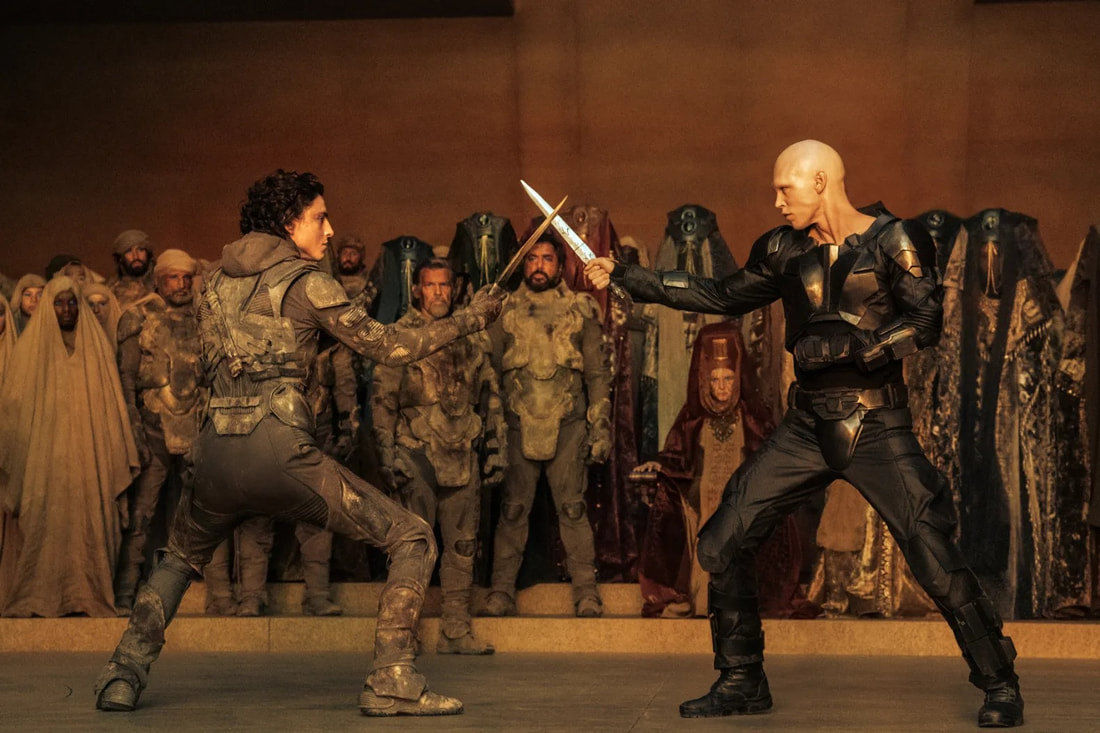 Image c/o NIKO TAVERNISE/WARNER BROS By Matthew Colvin Entertainment Columnist After a two and a half-year long wait that was nearly as torturous as the pain box lead protagonist Paul Atreides’ (Timothée Chalamet) hand was forced into in the first Dune film, writer/director Denis Villeneuve’s massive, ambitious and oh-so-sandy sequel has arrived. It is bigger, weirder, and more spectacular than the first film in almost every way. Put simply, Dune: Part Two is the sort of film that reminds you exactly why some movies are meant to be seen on the big screen.
Dune: Part Two picks up almost immediately after the ending of Part One, and it doesn’t waste time recapping or expositing what has already occurred on the desert planet of Arrakis. As such, the first film is effectively mandatory viewing if you want to understand the complex plotting and worldbuilding on display here fully. Paul and his mother Jessica (Rebecca Ferguson) have formed an uneasy truce with Chani (Zendaya), Stilgar (Javier Bardem), and the rest of the Fremen natives of Arrakis as they continue to flee the brutal soldiers of House Harkonnen who seek to snuff them out, ending the bloodline of House Atreides. The sequel feels a deal more fast-paced than its predecessor; Part One concerned itself greatly with set-up, spending much of its runtime on slow-burn worldbuilding and sowing seeds for later plot developments. Many elements that were introduced but not fully realized before are brought to the forefront now, from the Bene Gesserit’s insidious scheming to Paul’s mysterious visions, and since the audience is already familiar with these story threads, Part Two doesn’t have to waste any time before getting straight into the action. On the topic of action, the intense battle sequences between the Fremen and the Harkonnens, ranging from grand battles on fields of sand to intimate, intense duels, are utterly spectacular and account for many of the film’s most visually dazzling moments. As the story plays out, Paul finds himself ascending in the ranks of the Fremen in the name of claiming his role as ‘Lisan al Gaib’, a Messianic figure for the Fremen, while seemingly slowly losing his morals in the process. The central story is effective, largely due to the inherent tragedy it includes; Paul is a good person fighting for the right things, but the power of blind fanaticism overrides his original motivation and turns him into someone almost unrecognizable from who he was at the start of the film. The narrative at the core is powerful, but what truly makes this film astonishing to behold is the craft on display. The use of color, combined with Greig Fraser’s incredible cinematography, keeps the movie consistently beautiful from start to finish. One particularly striking sequence is set on the Harkonnen homeworld, which is so devoid of color that the whole scene looks as if it’s been shot in black and white. Fraser’s team shot the entire sequence with a modified infrared camera, and the footage was converted to monochrome in post, creating an incredibly striking, eerie visual feel. It is this brand of creativity that pervades the entire feature, and those moments of brilliant imagery will stick with viewers long after the credits roll. The sound design is incredibly immersive, made to be experienced in larger theater speakers; and when mixed with Hans Zimmer’s heated, often heart-pounding score, it becomes nearly unmatched. The performances are solid across the board, with a handful of standouts. Chalamet sells Paul’s entire arc over the course of the film exceptionally well, but Rebecca Ferguson’s performance as his zealous mother guiding his political and religious ascension is so gripping that it nearly overshadows him. It is a massive upgrade from her largely underwhelming presence in the first film. Likewise, Austin Butler shines as the new character Feyd-Rautha, an antagonist who would run the risk of being almost cartoonishly evil if it weren’t for how much sheer energy and fun he injects into the role. Dune: Part Two proves that science fiction can thrive just as well as any other genre in the film industry with competent direction and a passionate, skilled team (and the generous $190 million budget probably didn’t hurt either). So hop on your sandworm, get over to a theater, and see this one on the biggest screen you can before it goes streaming, because this film is as cinematic as they come. As it was written. 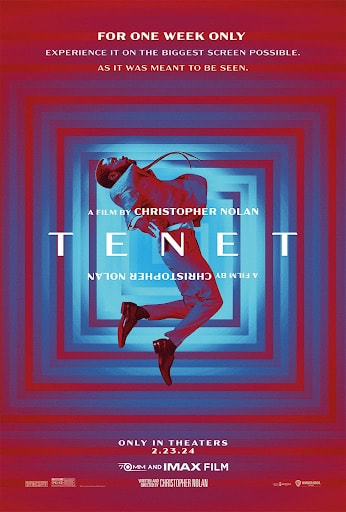 By Andrew Martinez Cabrera Entertainment Editor Four years ago, a global pandemic shut down the world. On the entertainment front, streaming services dominated the industry and cinemas took a heavy toll. Director Christopher Nolan, a well-known advocate for the movie theater experience, fought for his last film, TENET, to be released in theaters amidst the COVID-19 pandemic. Famously, Nolan fought with Warner Bros. to give TENET a proper theatrical release before putting it on MAX, formerly HBO Max. The rift between director and studio was so strong that they parted ways in a public and ugly divorce, causing him to shop his next film, Oppenheimer, to other studios. TENET went on to gross $364 million upon release, making it the first successful theatrical release during the pandemic but failing to break even on its 200 million dollar budget.
Now, in 2024, TENET was given a second life and re-released in theaters. Over the weekend, I got the chance to see it on the biggest screen possible, as it was meant to be seen. TENET, like other Nolan blockbusters, involves time as a central narrative mechanic but takes it to its most convoluted endpoint. Following a spy known only as The Protagonist (John David Washington), he sets out on an international mission only equipped with a secret word, “Tenet,” where he uncovers a mysterious weapon that can bend an object’s entropy, inverting it. With this physics-laced and incentive plot device, Nolan crafts a Bond/La Carré-esque spy film with a time-travel twist that needs to be seen rather than understood, which viewers often mark as its weakness. Usually, I’m a proponent of logistical narratives in film. However, cinema is a visual medium and TENET is one of the best mainstream examples of letting the images wash over you, even if they’re packaged with dense and incomprehensible exposition. It’s one of the few times that the marketing behind a film rang true when they spoke about TENET as something no one had ever seen before. I’d say that TENET makes more sense the more you see it but the less the viewer understands, the better. It is a cinematic trick pulled on viewers, listening to characters intelligently spew out physics jargon while a pulsating synth soundtrack plays in the background and you’re just left there shaking your head and agreeing just to fit in. In pulling a Raymond Chandler, where the plot becomes so labyrinthine that even the author himself doesn’t understand what’s going on, you only become in tune with the images projected. I don’t know why a car is speeding backward on a crowded freeway during a high-octane car chase or why they have to crash a real-life 747 into a freeport in Oslo, but my brain knows that it’s exciting because it’s a practical spectacle. Once “why” ceases from the viewer’s lexicon, TENET connects. To say that TENET lacks a coherent plot and relatable characters yet rather upholds cold, engineer-like precision over the film’s technical aspects misses the whole of what TENET has to offer. Like Oppenheimer, TENET explores a world in which a scientific breakthrough is destined to destroy us, albeit while also having scenes like the protagonist fighting an inverted version of himself. But infused in these action scenes is the message itself, where someone in the dark quite literally has to grapple with the mistakes of the past to correct the future. It’s a paradoxical conundrum driven by a character’s idealism that ramps up to TENET’s emotional catharsis. Nolan is a humanist and the only way he can articulate it is through scientific language and dramatic, large-scale thrillers. He’s an artist communicating his message through spectacle, even if his dialogue can seem formalist to a fault. When a discussion concerning free will’s effect through inversion arises, a scientist of all characters simply talks about inversion as such: “Don’t understand it, feel it.” While we may not understand what a “temporal-pincer movement” is, we do understand the weight of two characters who see their friendship as cyclically tragic and inevitable, a person’s ability to save oneself, and a familial love that connects us all. While it doesn’t reach the emotional apex of his other movies like Interstellar, to say it’s missing any emotion is a misreading. To say that is not emotionally sufficient is arguable but perhaps I am also idealistic in thinking TENET packages all of this pathos. To reduce myself to the simplest conclusion: the film rocks. So watch TENET with open hearts. Don’t just see it, feel it too. 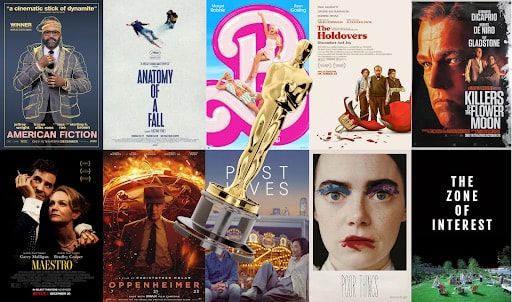 Image c/o Drew Paxman By Drew Paxman Editorial Designer/Visiting Entertainment Columnist Awards season is wrapping up and very few questions remain. This season’s Oscar races, with a few exceptions we will dive into, have cemented clear frontrunners in almost every above-the-line category. But that doesn’t mean we necessarily think those frontrunners should win.
In this article, you’ll see our final predictions for the above-the-line categories for the 2024 Academy Awards and who The Collegian staff thinks should win. Best Picture The nominees: American Fiction Anatomy of a Fall Barbie The Holdovers Killers of the Flower Moon Maestro Oppenheimer Past Lives Poor Things The Zone of Interest Expected Winner: Oppenheimer Staff Pick: Oppenheimer or Barbie This one is a done deal. Christopher Nolan’s sweeping summer blockbuster biopic is (spoiler alert) set to dominate on Oscar night. Oppenheimer won best picture prizes at the Golden Globes (for Best Motion Picture - Drama), the Critics’ Choice Awards, and the BAFTAs in addition to picking up a win for Outstanding Performance by a Cast in a Motion Picture at the SAG Awards. Couple those wins with 13 nominations and you have a set frontrunner. Our staff, however, is more divided. While half of us sided with the likely winner, the other half favored its summer blockbuster sibling, Barbie. While our polling may have been close, don’t expect the same results on March 10. Best Director The nominees: Anatomy of a Fall - Justine Triet Killers of the Flower Moon - Martin Scorsese Oppenheimer - Christopher Nolan Poor Things - Yorgos Lanthimos The Zone of Interest - Jonathan Glazer Expected Winner: Christopher Nolan Staff Pick: Christopher Nolan This one may be more set than Best Picture if you can believe that. Like his film in the Best Picture category, Nolan has won every best director award at the major precursors. Additionally, Nolan has never won an Oscar before, creating an “overdue” narrative that provides more incentive for voters to vote for him. Both our staff and awards voting bodies agree: Nolan’s directorial achievements are undeniable. Best Actor The nominees: Bradley Cooper - Maestro Colman Domingo - Rustin Paul Giamatti - The Holdovers Cillian Murphy - Oppenheimer Jeffrey Wright - American Fiction Expected Winner: Cillian Murphy Staff Pick: Cillian Murphy More Oppenheimer dominance, though this category is less crystal clear. After taking home the Golden Globe for Best Actor in a Motion Picture - Musical or Comedy and the Critics’ Choice Award for Best Actor, Paul Giamatti seemed like the likely frontrunner for his starring turn in The Holdovers. However, after recent wins at the BAFTAs and SAG (in addition to his Best Actor in a Motion Picture - Drama at the Globes), Murphy has ascended to the frontrunner position. Our staff agrees that Murphy should win, but also note both Giamatti’s and Bradley Cooper’s performances as particularly stellar. Best Actress The nominees: Annette Bening - Nyad Lily Gladstone - Killers of the Flower Moon Sandra Hüller - Anatomy of a Fall Carey Mulligan - Maestro Emma Stone - Poor Things Expected Winner: Lily Gladstone Staff Pick: Lily Gladstone or Emma Stone The hardest category to predict. A case can easily be made for both Stone and Gladstone as far as who will win on Oscar night. Let’s start with the basics. Both Stone and Gladstone won the Golden Globe for Best Actress in their respective categories. Stone then went on to win the Critics’ Choice and the BAFTA, while Gladstone recently was the victor at SAG. A few external factors separate these two nominees, as well. First off, Gladstone has a much stronger narrative than Stone. Her win would signify the first Best Actress win for any indigenous person and, unlike Stone, would be her first win in the category (Stone previously won this award in 2017 for La La Land, so there may not be a desire to reward her a second time so soon). Disputes given whether Gladstone is in the right category given her limited screen time, however, hurt her campaign. Gladstone was also not nominated at BAFTA, a noteworthy miss given Killers of the Flower Moon’s success in securing nominations in other categories. This situation can very easily be compared to last year’s Best Actress race in which SAG and Golden Globe winner Michelle Yeoh (Everything Everywhere All At Once) defeated Golden Globe, Critics’ Choice, and BAFTA winner Cate Blanchett (Tár) for the Oscar, becoming the first Asian-American actor to win Best Actress. While on the surface it seems like Gladstone’s case is identical to Yeoh’s, a couple factors separate this year’s race from last year’s: 1) Yeoh is a veteran actor and has been a force-to-be-reckon with in the film industry, creating an “overdue” narrative, and 2) Yeoh’s film went on to be the biggest Oscar winner since 2008, winning Best Picture and six other awards. Gladstone is a relatively new face in the film industry and does not have an “overdue” narrative like Yeoh. Additionally, Killers of the Flower Moon is firmly out of the Best Picture-winning conversation (Gladstone’s win would likely be the only one it would get). However, because of the significance of winning a SAG Award and because of similarities between Gladstone’s and Yeoh’s cases, we are hesitantly predicting Gladstone to win the Oscar. Our staff is just as torn on our personal preference as we are on our prediction. Stone and Gladstone give star-marking performances in their respective films. While Gladstone is subtly brilliant, Stone is eccentrically commanding on the screen. We understand voter’s confusion in picking a winner. Best Supporting Actor The nominees: Sterling K. Brown - American Fiction Robert De Niro - Killers of the Flower Moon Robert Downey, Jr. - Oppenheimer Ryan Gosling - Barbie Mark Ruffalo - Poor Things Expected Winner: Robert Downey, Jr. Staff Pick: Robert Downey, Jr. or Ryan Gosling Another addition to the Oppenheimer sweep. RDJ has this one in the bag. The former Avenger has won a Golden Globe, Critics’ Choice Award, BAFTA, and SAG Award for his performance as Lewis Strauss. At The Collegian, we are a little more mixed than the voting bodies. While we love Downey, Jr.’s performance, we are partial to Ryan Gosling’s comedic turn as Ken in Barbie. Unfortunately for him, Gosling’s performance might not have been Kenough to steal this Oscar away from Robert Downey, Jr. Best Supporting Actress The nominees: Emily Blunt - Oppenheimer Danielle Brooks - The Color Purple America Ferrera - Barbie Jodie Foster - Nyad Da’Vine Joy Randolph - The Holdovers Expected Winner: Da’Vine Joy Randolph Staff Pick: America Ferrera Another easy one here. Da’Vine Joy Randolph’s hauntingly beautiful performance in The Holdovers has got her all four major precursors and plenty of critics awards. Like Supporting Actor, this race is over. Our staff, however, preferred a different performance. Most of The Collegian staff voted for America Ferrera’s powerful performance as Gloria in Barbie. Her powerful monologue near the end sealed the deal for many of our writers. 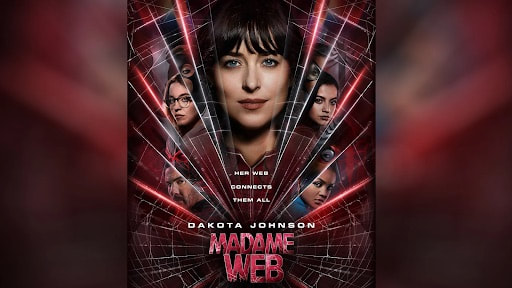 By Andrew Martinez Cabrera Entertainment Editor For cinephiles, the new year has begun with several momentous cinematic events. The Oscars are coming up and audience members have been bickering over nominations, snubs, and ultimately, disappointing winnings. While studios are busy campaigning for their Best Picture nominees, they have also been dumping movies that no one will watch and, ultimately, will die on arrival. The movie that has been leading in this category is the new live-action adaptation of Madame Web.
Madame Web is the third movie made by Sony-Marvel that is not connected to Disney’s Marvel Cinematic Universe (MCU). It also relates to Spider-Man’s extended universe (whatever that means) without ever showing Spider-Man. Instead, audience members follow the title character, Cassandra Webb, played flatly by Dakota Johnson, an EMT/ambulance driver in 2003’s New York City before getting her superpowers. I find it fitting that the movie is set in the early 2000’s. It felt like they found a 20-year-old script in a warehouse and decided to produce it so that Sony wouldn’t lose their license. Madame Web feels like a time capsule, reminiscent of a time when studios were still trying to figure out how to make superhero movies and would just throw things on a wall until something stuck. Madame Web, unlike an itsy-bitsy spider climbing on the wall, is a massacred splotch that stained the wall and somehow found itself in movie theaters. Let's be honest, no one is going to watch this. If I were to assign merit to an otherwise meritless cash grab, I’d say it is fun to watch. That being said, this fun comes at the cost of also having to sit through some boring sludge, just to end up laughing at the most abysmal line reads. So, indulge me in spoiling a movie that isn’t worth $12 of your hard-earned cash. Instead of going to the theaters, choose to stream this movie in the future, like Madame Web would have wanted it. That’s her whole gimmick anyway. Tell me, when you think of Spider-Man’s superpowers, do you picture web-swinging, superhuman abilities like strength and speed, and the famous Spidey-sense? What are Madame Web’s powers, you might ask? Clairvoyance. You know, that classic thing spiders do. Does she have any other abilities? Nope. Does she get a costume? Not until the last minute of the movie. The only connection between the two franchises is that she was bitten by a spider in the Amazon (or technically her mother was). A lot of plot building happens, and then she falls into a river and dies. Cassandra then gains her powers when an indigenous tribe of Spider-people helps her dying mother give birth to her or something. Hence, her powers become trauma-induced. This chaotic scene takes place in the first 20 minutes of the movie before it becomes a confusing version of Groundhog Day, where she’s struck with disjointed flashes of the future yet to happen. One of these flashes reveals to Cassandra that three teenage girls will also be targeted by the same evil Spider-Man-like figure that killed her mother. Does that sound convoluted? It is. Does this sound like a real movie? I know it shouldn’t be. Madame Web is undercooked in every single aspect of the movie-making process, from its weak script to weirdly-paced editing sequences, it is a disappointment. And again, no charismatic actors occur whatsoever. Part of its “charm” (and that’s being generous) is that it doesn’t feel like a superhero movie for the majority of its runtime. The references to Spider-Man are there to remind you of a different universe that audiences like more. This can clearly be seen in the movie’s teasing of the birth of Peter Parker,as if he were Jesus Christ Himself. The final scene of this movie perfectly encapsulates Sony/Marvel’s capitalistic ethos. Throughout the movie, Pepsi incorporated explicit product placement during seemingly inappropriate scenes, making their brand critical to the plot itself. Instead of ending the movie at a famous New York landmark, the director settled on a Pepsi-Cola billboard atop a decrepit firework factory. The ending in itself sounds like a cheap mad-libs construction. It culminated with one of the letters from the billboard detaching and crushing the villain to death; we can thank Madame Web’s clairvoyance for that one. To make matters worse, this death was teased throughout the entire movie. I couldn’t help but groan when I realized why: an advertisement takes out the bad guy and an inanimate Pepsi-Cola becomes the hero. It sounds like something Don Draper from Mad Men would have pitched. The movie ends with Cassandra saying that the best part about the future is that it hasn’t happened yet. It’s a sweet-enough sentiment lazily hamfisted into the movie. The best part of my future is never having to see Madame Web again. SPOILER WARNING for The Ballad of Songbirds and Snakes 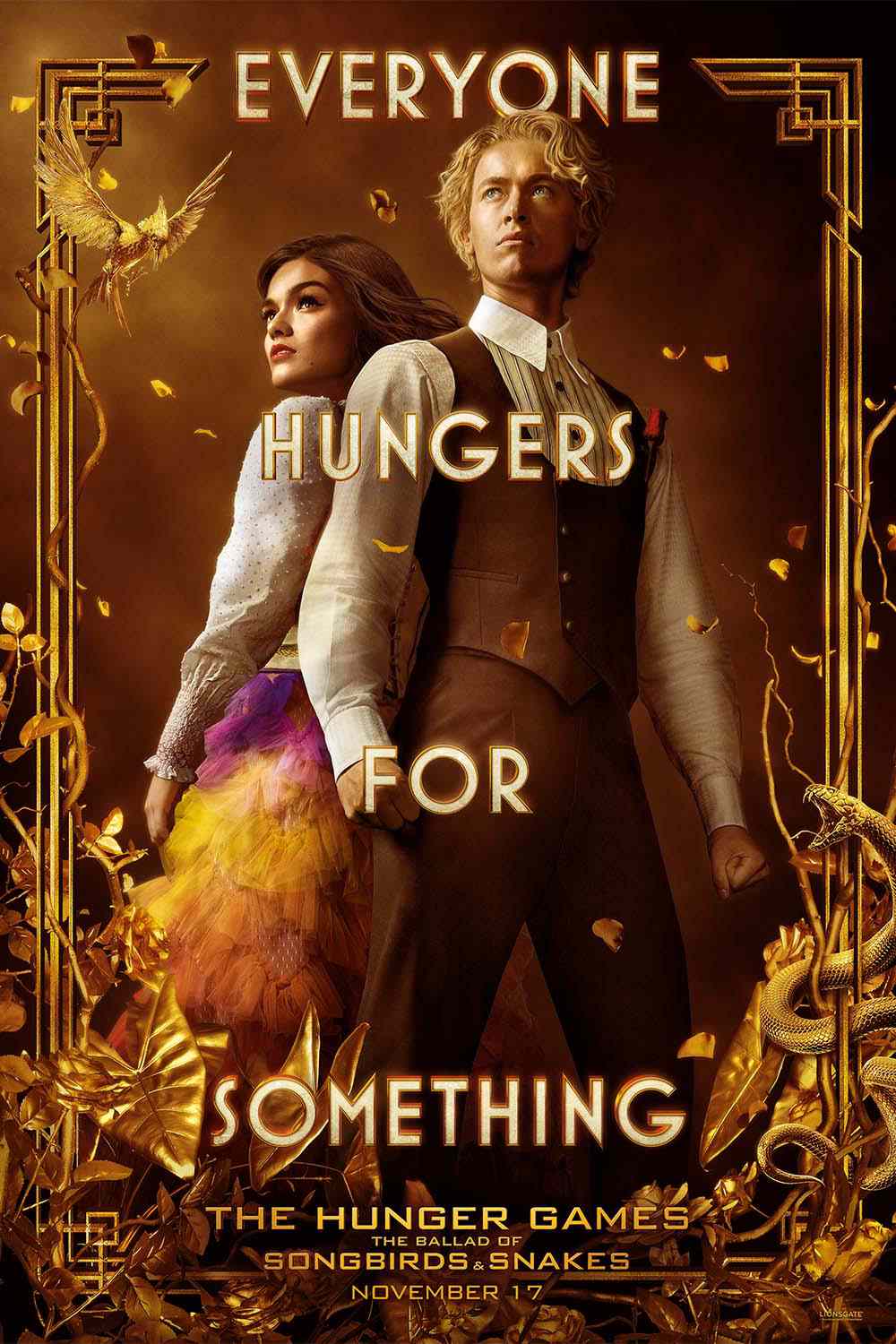 Image c/o Lionsgate By Madison Sciba Editor-in-Chief Eleven years after the first movie in the Hunger Games franchise was released, a prequel hit theaters. The Ballad of Songbirds and Snakes takes place 64 years before Katniss volunteers for her sister in the reaping. The film centers around Lucy Gray Baird, a singer from the poor District 12 and her romance with capital student, Coriolanus Snow. The film is essentially the villain origin story of the evil President Snow that we see in the original Hunger Games trilogy.
Normally a prequel or spinoff of a popular franchise can be a severe disappointment to fans. The Ballad of Songbirds and Snakes, however, held up to the standard set by The Hunger Games over ten years ago. The movie not only filled a void that was left after Mockingjay Part 2 was released but can have some fans leaving the theater with a moral conundrum. The central character, Coriolanus Snow, spends the entire film in constant conflict with his morals. Those with knowledge of the original trilogy know that Snow eventually becomes the ruthless dictator who causes so much death and violence. In the film, however, the audience even starts to pity him: the poor pretty boy down on his luck doing what he thinks is best for his family and country. It did not hurt, of course, that the actor chosen to play the young Coriolanus Snow was extremely attractive. Overall the film was impressive and fit extremely well into the Hunger Games universe. It may surprise some people, but the focus of the film is not on the Games but rather Snow’s life and internal conflicts. While it is a serious film with a lot of death, there is a surprising amount of humor. Lucky Flickerman steals the show with his witty and snarky commentary. “Ill Dill, tuberculosis on legs,” said about one of the characters, was out of pocket but made the entire theater chuckle. If you enjoyed the previous movies or just want a deeper understanding of the trilogy, I highly recommend reading the novel of the same name. It goes in such depth and is told through Snow’s point of view, giving a much deeper angle to the character’s intentions and thoughts. |
STAFFMadison Sciba '24, Archives
October 2023
Categories |
 RSS Feed